Facing brickwork is the part of the building everybody looks at for the next hundred years, so it gets set out from the centre and gauged to the openings rather than started in a corner and fudged at the end. Stretcher bond, flemish, soldier courses, brick-on-edge, arches, plinths and corbels, on new build plots and on extensions that have to match an existing house.

Gauge rods before the first course, perps plumbed down the elevation, and the coursing worked so cuts land at the least visible point. A wall that is set out properly needs fewer cut bricks, and the cuts it does need end up somewhere sensible instead of beside the front door.
On extensions and alterations the new work has to sit next to something already there. That means matching the brick, the bond and the joint, and matching the mortar colour once it has dried rather than while it is wet. We will tell you honestly when an exact match is not achievable and what the best available option looks like.
Bucket handle, weathered, recessed or flush, chosen to suit the building and then kept consistent from the first lift to the last. Joints ironed at the right time, not two days later, because a joint that is finished too late never looks the same as the one next to it.
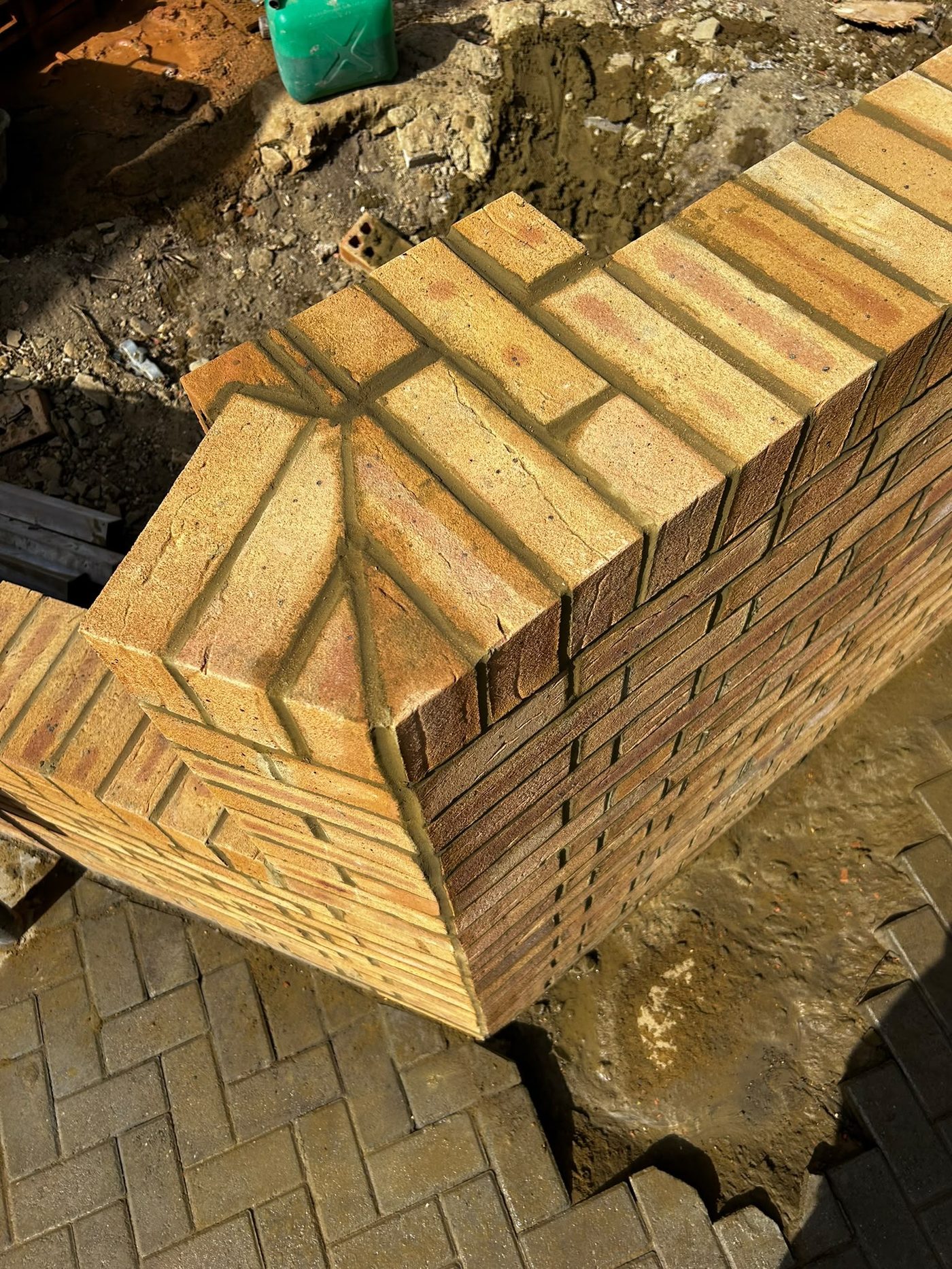
Soldier courses over openings, brick-on-edge cills, arches, plinth courses, feature panels and corbelled detail. This is the work that decides whether a house looks builder-standard or looks considered, and it is the reason developers keep the same gang across a phase.
Usually, and where an exact match is not on the market we will bring options and show you what they look like laid rather than as a single brick in a hand. Matching the mortar matters at least as much as matching the brick, and mortar changes colour as it dries, so we judge it dry.
Both. Soldier courses, brick-on-edge, arches, plinths, corbels and feature panels are all normal work. If you have a drawing with a detail on it, we will price it. If you want something and do not know what it is called, send a photo.
On new build it is normally per thousand or per plot against the drawings and the programme. On extensions and one-off jobs it is priced as a job after a look at the site. Either way you get a written figure that says what is included, not a day rate that quietly grows.
Yes. Scaffold lifts are kept tidy as we go and the elevation is cleaned down at the end. Mortar splashes are much easier to deal with the same week than six months later, and acid cleaning an entire elevation is a last resort rather than a plan.
That is the intention and it is one of the reasons the finish stays consistent. Bricklayers each have a slightly different hand, so swapping a gang mid-elevation shows. Where the programme forces a change we keep the setting out and the joint finish the same.
Based in Watford and out across Hertfordshire and north west London most days, so a look at your job is rarely more than a couple of days away. Development and plot packages are taken on nationwide.
Send the drawings or a few photos over and we will price it up.